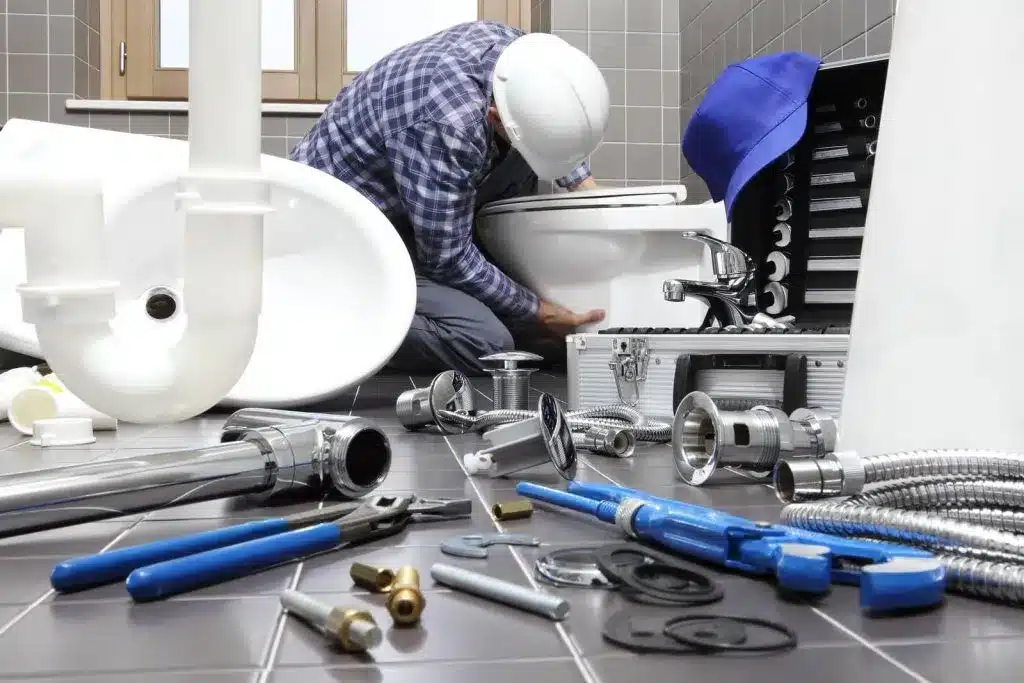
A bathroom faucet leaking at the base is more than just a minor annoyance, it can indicate underlying problems that, if left unaddressed, may lead to water damage, mold growth, and higher water bills. Common causes include worn-out O-rings, loose mounting nuts, damaged cartridges, or mineral buildup from hard water. Identifying the source of the leak early is essential to prevent more serious plumbing issues.
Fortunately, many base leaks can be resolved with straightforward DIY steps. Homeowners can turn off the water supply, remove the faucet handle, inspect and replace worn O-rings, tighten the base, and test the faucet for leaks. These simple actions often restore proper function and prevent further water damage, saving both time and money. If you’re in Ocean County, reliable plumbing services in Toms River, NJ can quickly diagnose and resolve faucet leaks before we turn into major plumbing repairs.
However, some leaks require professional intervention. Licensed plumbers can accurately diagnose complex issues, recommend repairs, or replace outdated faucet fixtures. Timely action ensures efficient water usage, protects your bathroom, and maintains both the function and appearance of your faucet for years to come. In this guide, we’ll break down common causes, simple DIY checks, and when to consider faucet fixture replacements.
What Causes a Faucet to Leak at the Base?
Before grabbing your wrench, it helps to understand what’s going wrong. Here are the most common reasons your leaky bathroom tap might be acting up:
- Worn-out O-rings or seals: These rubber components prevent water from seeping out where it shouldn’t. Over time, they break down.
- Loose faucet base or mounting nuts: Water can sneak out if your faucet isn’t securely fastened.
- Cracked cartridge or valve seat: These internal parts regulate water flow and, when damaged, may let water leak into areas it shouldn’t.
- Corroded washers or mineral build-up: Hard water deposits can block parts of the faucet and lead to leaks. Learn more about how hard water affects plumbing from the U.S. Geological Survey (USGS). If you’re dealing with repeated buildup issues, it may be time to consider a water filtration system or water softeners to protect your fixtures and pipes.Hardness of Water | U.S. Geological Survey
DIY Steps to Fix a Faucet Leaking at the Base
Not every bathroom plumbing leak requires a professional. Follow these steps to attempt a dripping faucet fix yourself:
1. Turn Off the Water Supply
- Look under the sink and twist the shut-off valves clockwise.
- Test the faucet to ensure the water is off.
2. Remove the Faucet Handle
- Use a screwdriver or Allen wrench to remove the handle cap and unscrew the handle.
- You may need a caulk remover if the faucet is sealed to the sink with silicone or adhesive. Here’s a helpful DIY guide from The Family Handyman on removing caulk safely.
3. Inspect and Tighten the Base
- Check the mounting nuts and base for any looseness.
- Use a basin wrench to tighten the faucet base, just don’t overtighten and damage the components.
4. Check and Replace O-rings or Cartridge
- Pull out the spout to access the O-ring.
- If worn or brittle, replace it with a new one.
- If your faucet uses a cartridge, remove and inspect it, replace if cracked or corroded.
5. Reassemble and Test
- Put everything back together.
- Slowly turn the water supply back on and test for leaks.
If you’ve followed these steps and the leak continues, the problem may be deeper within the plumbing system or the faucet itself may need to be replaced. While DIY fixes are great for minor issues, persistent leaks can lead to water damage and higher utility costs if left unresolved. In these cases, it’s best to seek reliable plumbing services in Toms River, NJ to ensure the repair is done correctly and safely.
When to Call a Plumber
Sometimes DIY just won’t cut it. Here’s when you should search for a plumbing inspection near me:
- You’ve tried tightening and replacing parts but the leak persists.
- There’s visible corrosion or damage to faucet components.
- Water is pooling around the sink or dripping into the vanity cabinet.
- You notice additional issues like a running toilet or need to replace the wax ring on toilet.
- More complex jobs like repiping or full pipe bursting may also be necessary if multiple fixtures are affected or aging pipes are involved.
A licensed plumber can quickly identify hidden plumbing issues and recommend long-term solutions like faucet fixture replacements. If you’re unsure about the severity of the leak, consider this EPA guide on household leaks and how much water they can waste.
Why Faucet Fixture Replacements May Be a Smart Move
If your faucet is outdated or continues to leak despite repairs, replacing it might save you money and headaches long term. Newer models are more efficient and better sealed, meaning fewer leaks and lower water bills. Plus, updated fixtures can give your bathroom a fresh, modern look.
Don’t Ignore That Leaky Bathroom Tap
A bathroom faucet leaking at base is more than just a nuisance, it’s a sign your plumbing system might need attention. Tackling the issue early can prevent water damage, mold growth, and wasted water.
Whether you’re trying a dripping faucet fix on your own or calling in a professional for a full inspection, knowing what to look for is key. And if it’s time for an upgrade, consider faucet fixture replacements to restore style and function to your bathroom.
Final Thoughts & Next Steps
Leaky faucet? Loose base? Don’t wait until a minor leak becomes a costly repair. Try these easy DIY fixes, and if you need help, reach out to your local plumber for expert service and long-term peace of mind.
Need help fast? Schedule a plumbing inspection near me today!
Looking to refresh your space? Ask about faucet upgrades and full faucet fixture replacements to improve your bathroom’s efficiency and appeal.
Frequently Asked Questions
If your faucet only leaks at the base when it’s running, it’s likely due to a worn O-ring or packing seal inside the faucet. These rubber components are designed to prevent water from escaping, but over time they can degrade. Another possible cause is a damaged cartridge or valve inside the faucet, which may allow pressurized water to seep downward when the handle is turned. In some cases, water may be leaking from the handle and running down to the base, which can appear as if the leak is originating at the bottom.
Yes, a common cause of faucet leaks at the base is loose mounting hardware. If the faucet isn’t securely anchored to the sink or countertop, water can seep through small gaps. Tightening the mounting nuts beneath the sink often resolves the issue, but care should be taken not to overtighten, which could cause damage. In older homes, especially in areas like Toms River where fixtures may have settled or shifted, misaligned or warped surfaces can prevent a proper seal even if the hardware is snug.
Absolutely. Many areas in New Jersey, including Ocean County, have hard water, which means the water contains a high concentration of minerals like calcium and magnesium. Over time, these minerals can accumulate inside faucet components, causing buildup that weakens seals, corrodes parts, and increases friction. This mineral scaling can make it more likely for O-rings and cartridges to fail, leading to leaks at the base of the faucet. Installing a water softener or filtration system can help reduce these issues.
To determine if you’re dealing with an actual leak or just water from splashing or condensation, start by thoroughly drying the faucet and surrounding area. Then, turn the water on slowly and observe whether any moisture reappears at the base without any visible splashing. You can also place a dry paper towel around the base of the faucet; if it becomes wet without any water contact from use, you’re likely dealing with a leak. Additionally, check inside the cabinet below the sink for signs of dripping or water pooling, which suggests a more serious leak.
Whether to repair or replace your faucet depends on its age and condition. If your faucet is relatively new and in good shape, a simple repair like replacing an O-ring or cartridge can usually fix the leak. However, if the faucet is older, corroded, or has already been repaired multiple times, it might be more cost-effective to replace it altogether. Replacing an outdated faucet also gives you the opportunity to upgrade to a more modern, efficient model, which can improve water savings and the overall look of your bathroom.
While some base leaks can be fixed with basic tools and a little patience, there are times when calling a plumber is the smarter move. If you’ve already tried replacing parts and the leak continues, or if there is visible corrosion or damage you can’t access, professional help is warranted. You should also reach out to a plumber if water is dripping into the cabinet below or if other plumbing issues like low pressure or gurgling noises are present. In homes around Toms River, where plumbing systems can vary widely due to age, a licensed plumber can ensure the job is done properly and meets local code.